
Let me say outright that I find the task of writing an ‘about me’ section to be disingenuous and performative in nature. Lump it together with the networking bio, the cover letter, and the personal essay; it’s a humiliation ritual. Go on, distill your very essence into a handful of paragraphs—and you’d better be pithy, humble, and evocative. I don’t know anyone who enjoys the experience.
Yet here I am, writing one when I don’t have to, and here you are reading it, knowing damn well you know enough ‘about me’ to be here in the first place. We probably have a shared history and even a few secrets. Why are we doing this to ourselves?
I
As a kid, I often fantasized about running away to live in the woods. I spent hours with big headphones on my tiny skull, listening to all kinds of music—cassettes and CDs my parents hoarded, an eclectic mix of Caribbean staples and pop juggernauts from the preceding 30 years—dreaming up places where I could be alone to write stories.
My five-year-old brain had really important thoughts about the state of existence, about love and life and death. I needed quiet. In my mind, I’d learn how to live off of the land; sometimes I had a horse, other times I tanned leather pelts for trade. Never mind that I’d never been camping or that I was a vegetarian because of a bad dream I once had about a cow. I dutifully practiced my new life by stealing dry beans from the kitchen and planting them at the bottom of 3-litre soda bottles I scooped dirt into. It was only a matter of time. I was good at raising plants, just like Dad, though admittedly the beans were also very forgiving.
II
Quiet existed, but less in deliberate meditative pauses and more in the spaces between adventures. I think about the feeling of catching your breath right before you fall into icy cold water. I gave myself enough time to brace before jumping into the next thing and that was about it. Before I was a lawyer, I was an editor at a magazine. I have two bachelor’s, a JD, two professional certifications, and three state bar licenses. I’ve wedged all kinds of lives in between (freelance writer, English tutor, musician, paralegal, customer service, charity canvasser, photographer, wait staff, secretary). I’ve raged in boxing rings and at concerts for years, run long distances and overcame a phobia to learn how to swim. I even got super religious for a hot minute and finished RCIA. I have a small army of young adults I’ve mentored and somewhere there’s lost footage of me doing panels, speaking engagements, and interviews. My name sits on bylines, in liner notes, on plaques, on walls, buried in thank you sections—and there are many more places where I chose not to take credit.
It’s a lot, I get it, and probably the opposite of quiet. I don’t have an excuse, I just don’t know how to do things in half measures. I love being creative, I love helping people, I love problem-solving and I love keeping busy. It appeases a part of me that is probably some kind of maladaptive coping mechanism for anxiety and hypervigilance. This feeling—that to slow down is to give up and to give up is to die—runs deep. I don’t know what to do with myself when I have free time.
So, of course, the great joke of the universe is that all I have left now is a thinking brain in a failing body… and loads of free time.
III
Getting diagnosed as terminal is a rug pull. I mean…it’s really shitty; I can’t recommend enough that you avoid it if you can. With each new development, your life shrinks a little bit more. The research, the appointments, the testing, and the medications take over until there’s no room in your life for anything else. And then that version of busy goes away too.
Dying is something that can’t be resolved and won’t be ignored. Everything gets worse. Testing stops, solutions run dry, appointments are pointless.
I exist in a space between what I was and what I can no longer be. It’s quiet here. The hours stretch before me interminably and yet, it never feels like enough.
It’s hard to turn off the go-go-go part of me; the general busyness I’ve spent years feeding my neurosis with is gone. I’ve been trying to reconcile the emptiness, the absurdity of living with a terminal illness, and of letting go of what I thought life should be. I’m not exactly good at embracing it. I fight the exhaustion and throw myself into projects I have no business occupying my time with. It’s kind of how this website came to exist.
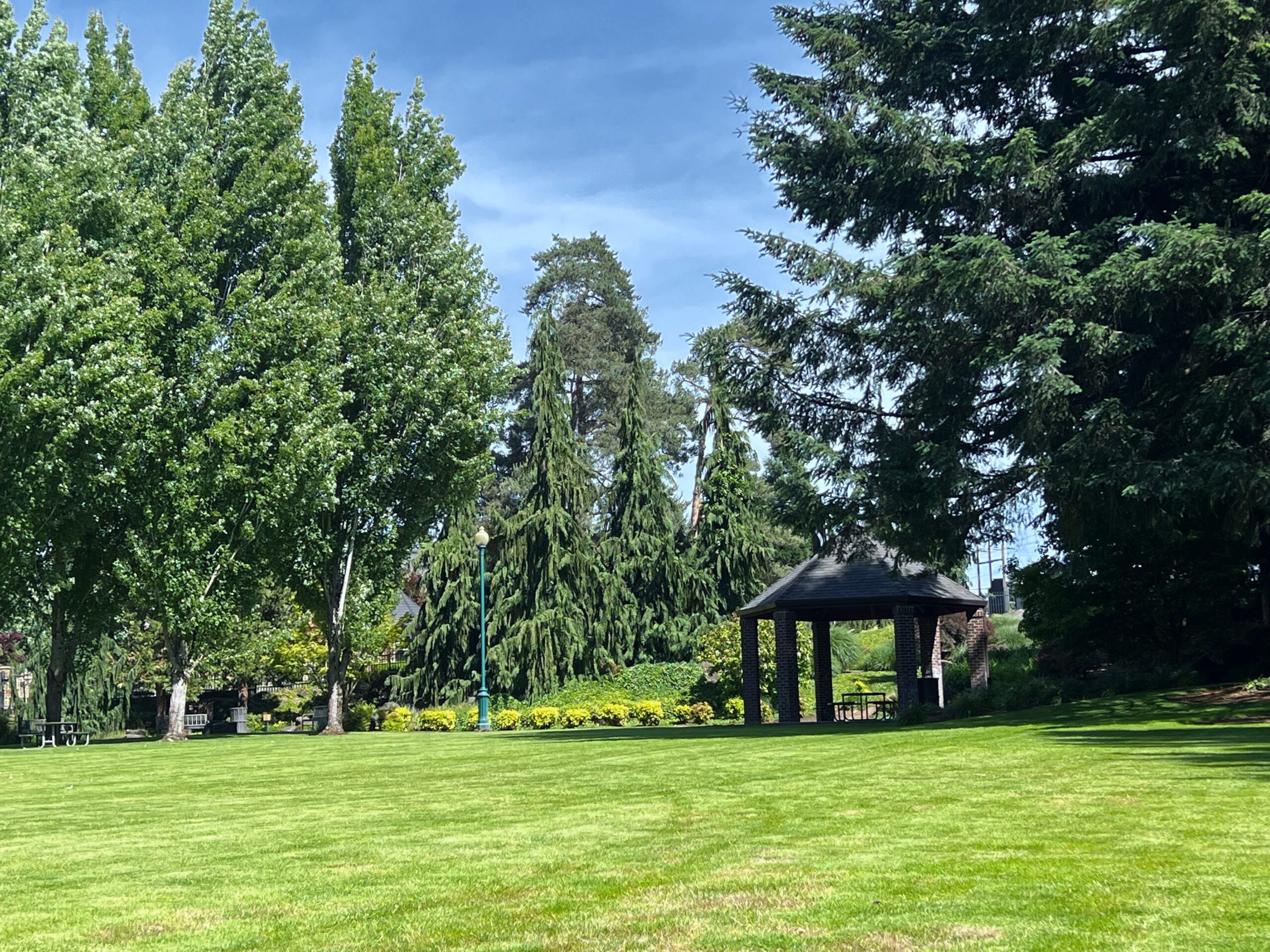
But I’d like to think that if my five-year-old self could see me today, she’d be stoked about where I landed, even if this wasn’t the plan. The Pacific Northwest is probably as close an approximation as a city girl like me could stomach. When I get away from the main road and among ancient trees, nary another human in sight, I can appreciate that I’m a long way from The Bronx. It’s gorgeous up here, quiet. A good place to slow down and think, to write… Even to die, if you feel like it.
Reach out
I made a personal website because I got sick of social media getting in the way of staying in contact with my social group. It’s genuinely been a fun project and my hope is that this will allow me to keep everyone updated on my life within the constraints of my growing exhaustion levels.
Passwords and Filters.
Two sections are password protected, Memories and Health. You can text or contact me for the two different passwords.
Two sections have filtered content automatically, Freeform and Health. For the most part, the filters hide content dealing directly with grief, symptoms or other horrible things that may be triggering or difficult to deal with.
Use the filter button to unhide those sections, but be warned.
Chronology.
Unlike a regular blog, most posts in here will be expanded on over time and/or appear out of chronological order. The reason for that is that time has no meaning for me anymore. To the extent it’s relevant, I will keep a date on updated posts but your best bet is to sort through filters instead.
Sections.
Unfiltered opinions about the media I’m spending time with.
Photos and some of the stories behind them.
Unstructured thoughts and random blog entries.
Long-form writing and archived works.
Updates about the illness and living with it.
A primer.
ALS stands for amyotrophic lateral sclerosis, also called Lou Gehrig’s disease. It’s a neurodegenerative disease, which means the nervous system breaks down over time. There is no cure. There are no effective treatments. Some medications exist, but they don’t slow the disease, improve function or alleviate symptoms. The average life expectancy after diagnosis is two to five years.
There is no known cause. About 5 to 10 percent of cases are genetic; the other 90 to 95 percent are sporadic, with no explanation.
The disease kills motor neurons over time, meaning the symptoms progressively grow worse. Motor neurons are the nerve cells that tell your muscles what to do. There are two types. Upper motor neurons carry signals from the brain down the spinal cord. When they fail, you get stiffness, spasticity, slow movement. Lower motor neurons carry signals from the spinal cord to the muscles themselves—the fine movements like using your fingers, but also walking, swallowing, speaking. When they fail, the muscles weaken, twitch, and waste away. Sensation stays intact, so while you can still feel everything, you eventually fully lose the ability to move.
ALS affects the entire body, not just the obvious muscles. For example, the diaphragm, tongue, vocal cords, and throat can be impacted, making breathing, speech, and swallowing difficult or even dangerous. Even the stomach and digestion slow down. Chronic fatigue and relentless exhaustion are a hallmark of the illness.
In some cases, ALS can also cause cognitive or behavioral changes. Up to half of people with ALS experience some level of this. About 10 to 15 percent develop frontotemporal dementia, which can affect personality, impulse control, empathy, or judgment. It’s not the same as Alzheimer’s because memory often stays intact. But the person can change.
En español
ALS son las siglas de Esclerosis Lateral Amiotrófica (o ELA en español), también llamada enfermedad de Lou Gehrig. Es una enfermedad neurodegenerativa, lo que significa que el sistema nervioso se deteriora con el tiempo. No tiene cura. No existen tratamientos efectivos. Hay algunos medicamentos, pero no detienen la enfermedad, ni mejoran el funcionamiento ni alivian los síntomas. La esperanza de vida promedio después del diagnóstico es de dos a cinco años.
No se conoce la causa. Entre el 5 y el 10 por ciento de los casos son genéticos; el otro 90 a 95 por ciento son esporádicos, sin explicación alguna.
La enfermedad va matando las neuronas motoras con el tiempo, lo que significa que los síntomas empeoran progresivamente. Las neuronas motoras son las células nerviosas que le dicen a los músculos qué hacer. Hay dos tipos. Las neuronas motoras superiores llevan señales desde el cerebro a través de la médula espinal. Cuando fallan, se siente rigidez, espasticidad y movimientos lentos. Las neuronas motoras inferiores llevan señales desde la médula espinal directamente a los músculos—para los movimientos finos como usar los dedos, pero también para caminar, tragar y hablar. Cuando fallan, los músculos se debilitan, sufren espasmos y se atrofian (se consumen). La sensibilidad se mantiene intacta, así que aunque uno puede sentir todo, eventualmente se pierde por completo la capacidad de moverse.
La ELA afecta el cuerpo entero, no solo los músculos obvios. Por ejemplo, el diafragma, la lengua, las cuerdas vocales y la garganta pueden verse afectados, haciendo que respirar, hablar y tragar sea difícil o incluso peligroso. Hasta el estómago y la digestión se vuelven lentos. La fatiga crónica y el agotamiento constante son característicos de la enfermedad.
En algunos casos, la ELA también puede causar cambios cognitivos o de comportamiento. Hasta la mitad de las personas con ELA experimentan algún nivel de esto. Alrededor del 10 al 15 por ciento desarrollan demencia frontotemporal, la cual puede afectar la personalidad, el control de los impulsos, la empatía o el juicio. No es lo mismo que el Alzheimer porque la memoria suele mantenerse intacta. Pero la persona puede cambiar.
Resources
If you want to learn more and support the organizations who have been supporting me:
ALS Northwest — Tons of information and support for pALS in PNW. → Team Gleason — Amazing organization that supports pALS. →Vivi
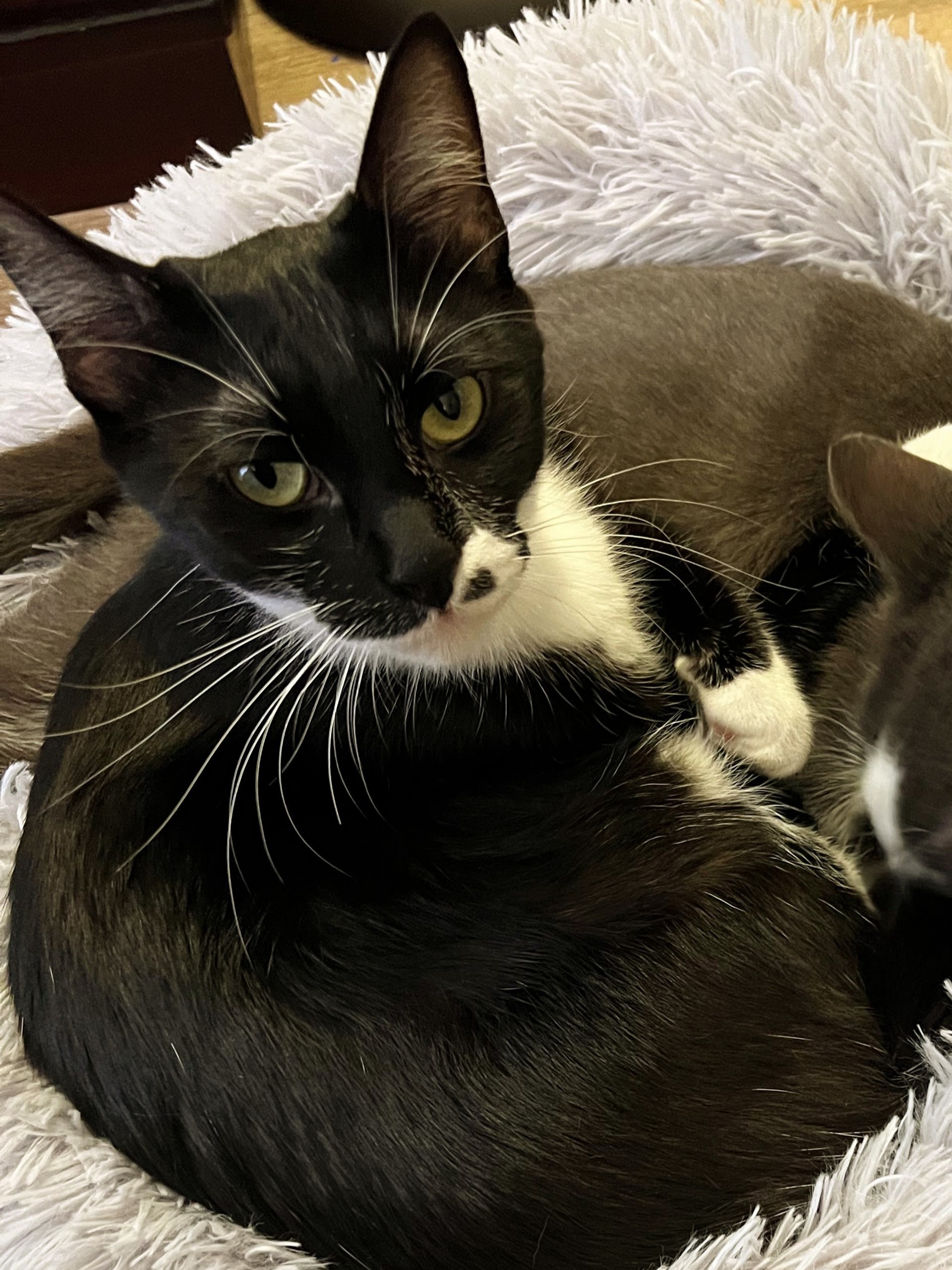
Exudes main character energy, especially when she doesn’t believe enough eyeballs are on her. She is cuddly and sweet, has no sense of stranger danger, and is living her best life when there’s something to knock down from a high shelf. Loves to fight, is terrible at it, and she will hiss if she thinks you won’t let her win. Easily confused. She once forgot that Kafka lives with us after Kafka got out for two minutes and came back in. Another time a stray cat outside hissed at her and she spent the next two days fighting Kafka because I think she got confused about who was who.
Vivi is an incredibly picky eater, and she is even less inclined to eat if she thinks you’re watching. Loves wet food only if it’s chunky, one (expensive) dry food, but will not eat snacks or treats. Her favorite toys are the ones that are not actually toys like shoelaces, business cards and bread ties. She loves ripping important papers to shreds, but only if they have consequence. Don’t give her anything even remotely close to a silk or bookmark ribbon. She will eat it. She also loves chewing plastic and drooling on blankets. I don’t know why.
She needs to be where you are at all times. When I lay down to go to bed, she’ll lay down with me until she thinks I’m falling asleep, and then she’ll go somewhere else for a bit. When I leave my room, she wants to follow. If I’m watching something, she’ll sit right in my line of sight in front of the screen, including if I’m looking at my phone. She also loves pulling plugged chargers from the wall.
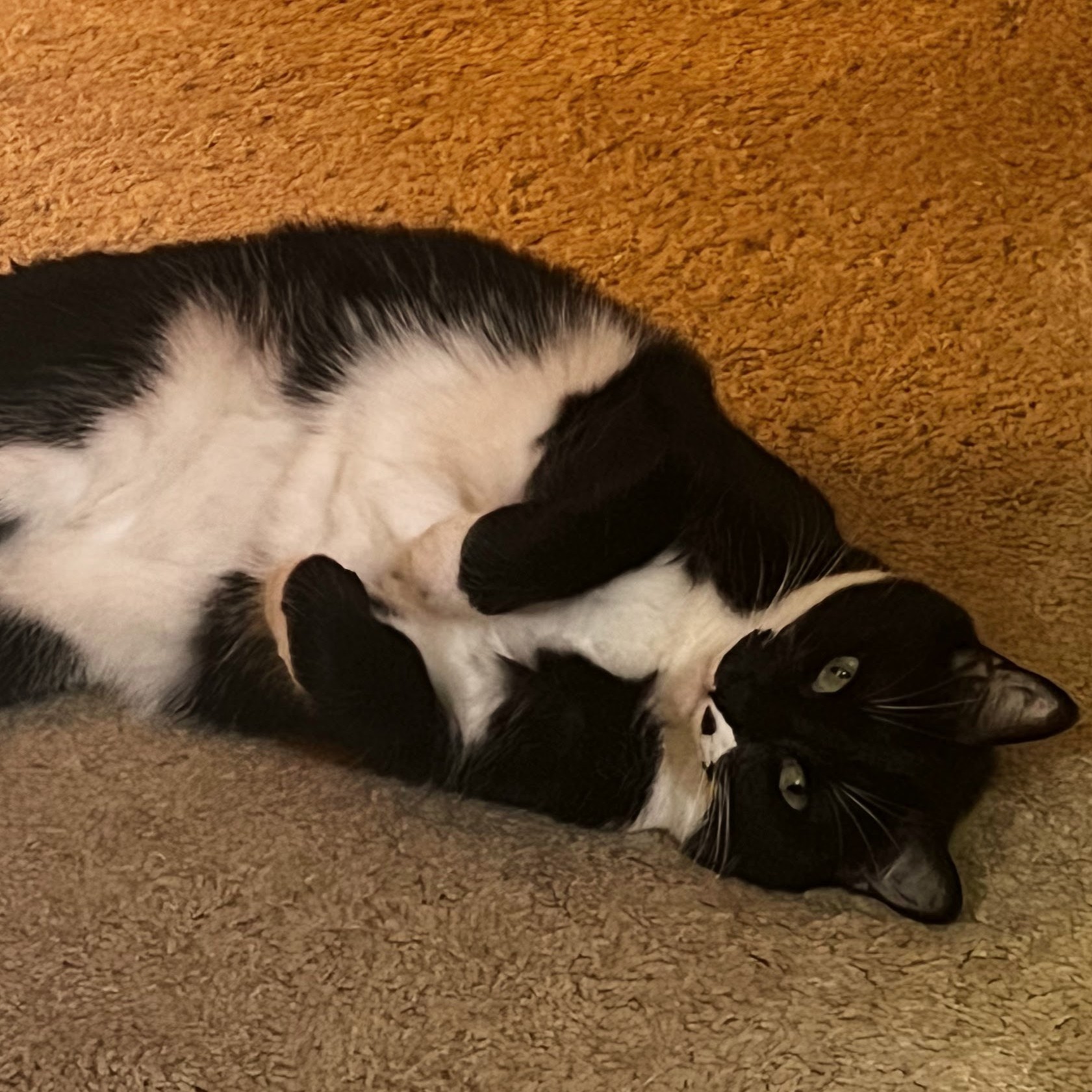
Vivi is a rescue. As far as I understand it, she was entirely too young when she was weaned off of her mother. They found her in a cat case alone in a hotel room after someone checked out and left her there for hours. I met her when she had just arrived at the cat cafe and wasn’t really getting along with the other cats. I think that experience at the hotel is why she has a tough time with closed doors or being left alone for long stretches of time. She also makes biscuits on everything.
When she isn’t throwing up on the carpet or ripping the window screen, you can find Vivi cuddled up somewhere warm. Sometimes a lap, sometimes the laptop. Sometimes on your face while you’re sleeping. Her 3am move is jumping from the windowsill onto your neck.
Kafka
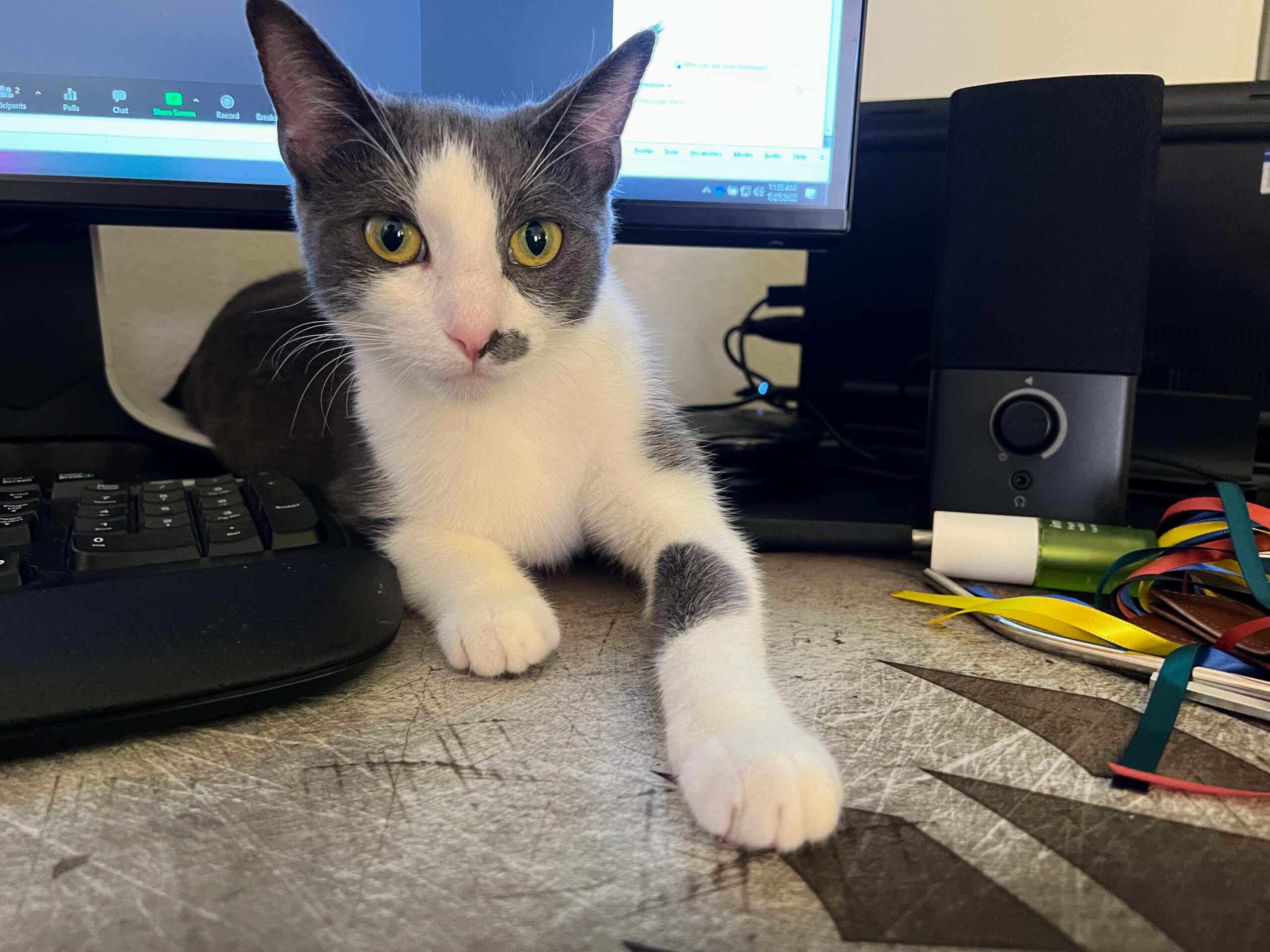
Kafka is a shy girl. She will allow a brief moment when you are allowed to shower her with affection, toys, treats, cuddles… but then you have to back off. It’s not uncommon for her to stay in a different room if there’s people over. If you’re the only one there, she’ll stay in line of sight but keep her distance. Don’t be offended. She hangs out when it counts. If I’m having a tough emo day, she will come by to make sure I’m okay. When I fall out of my wheelchair, she gets under my arms to try to help me at least sit up a little and she’ll hang out.
She loves eating and isn’t particularly picky about what to eat. If you’re not careful, she will steal your bacon or chicken. She prefers if you watch her six while she’s eating and she will herd you to her food bowl to make sure you watch her eat first thing in the morning. Above your objections, she will watch you when you’re in the bathroom. She will even time her own bathroom time with yours so that you guys can go together.
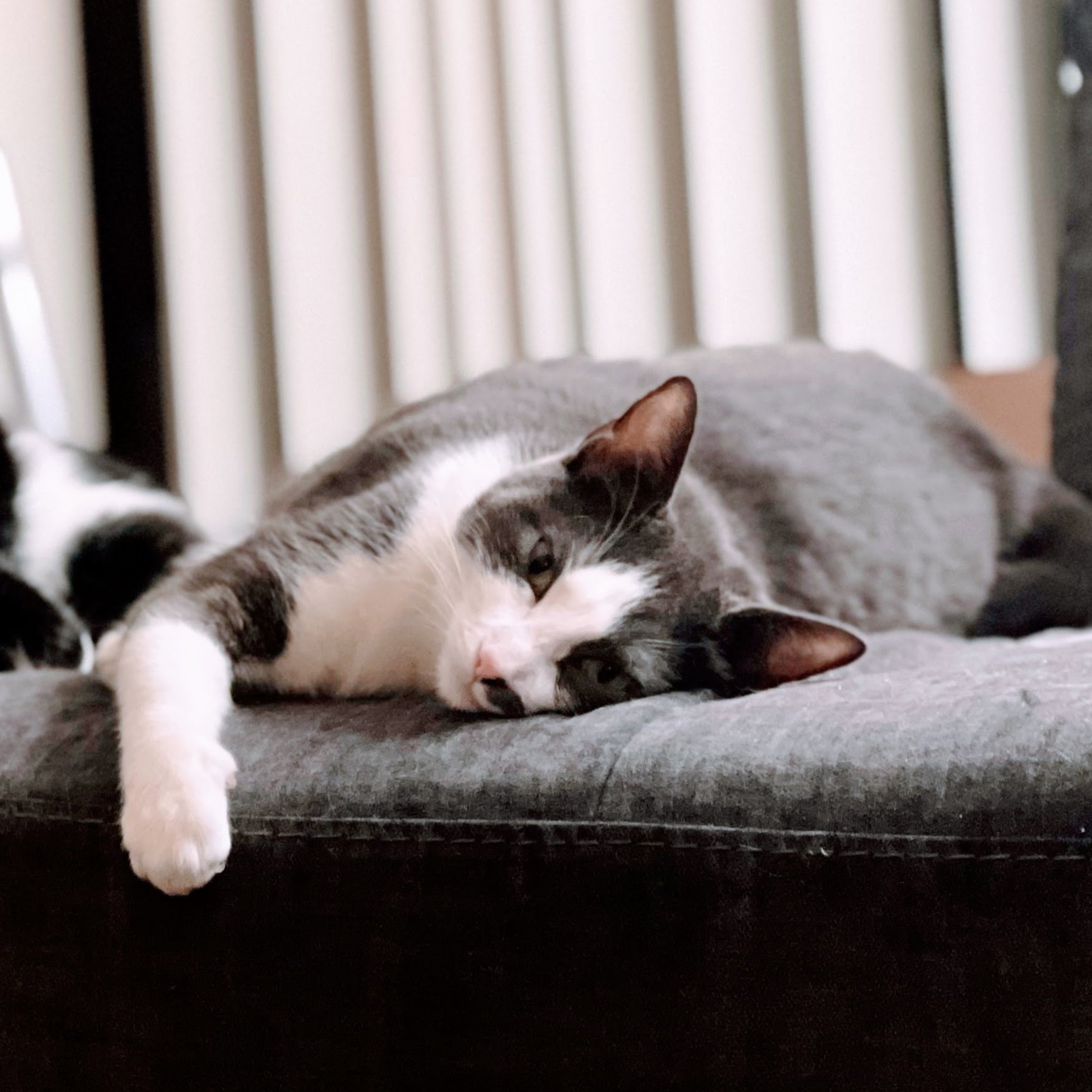
Kafka hasn’t met a toy she didn’t love, but her favorites are the plushy ones about the size of a kitten. She has a squid toy that she drags everywhere with her, including to bed. She will only lay by you after you’ve fallen asleep, and if she thinks you’re about to wake up, she fucks off right away to watch you from the other room.
Kafka is also a rescue, but she spent months at a cat cafe where strangers and about 25 other cats constantly invaded her personal space. She had one pregnancy before the Rescue spayed her. She probably hit her max on the amount of humans she’s capable of tolerating, so I just let her do her own thing; if she wants affection, she knows where to find me.
Most days you can find her at the window or on a shelf trying to assess your behavior in silent judgment. She loves making eye contact with you as she knocks everything off the table or adjusts art on the wall. It’s not uncommon to find her licking the hardwood floor even though there seems to be nothing there, or ripping up anything cardboard. Her 3am move is clawing at your toes under the blanket.